


An East Devon couple who invested their lifesavings in a chalet park business fear their future income could be wiped out by new government landlord rules.
The owners of a Devon chalet park are urgently seeking ways to avoid being wrongly caught up in rogue landlord reforms over fears their business could “no longer be viable”, writes local democracy reporter Bradley Gerrard.
Shelley and Martin White, who run the Tower Park Chalet Park in Seaton, East Devon, say the government’s legislative overhaul that is aimed at protecting people who permanently live in leasehold properties has unintentionally captured their holiday chalet park in its net.
The pair already thought they were dealing with an issue that needed to be solved, but believed they had time because the leases on their chalets run for another 42 years before renewal.
However, as part of the government’s changes, a ground rent cap is set to be introduced before the leases expire; initially this was predicted to be instated at the end of 2028, but could now be in late 2027 according to reports, making it a “very urgent issue” for the business.
“We could potentially lose 50 per cent of our income and the park could no longer be viable,” Ms White said.
“We work in the business full-time and rent our own home as we couldn’t afford to buy the site and a house.”
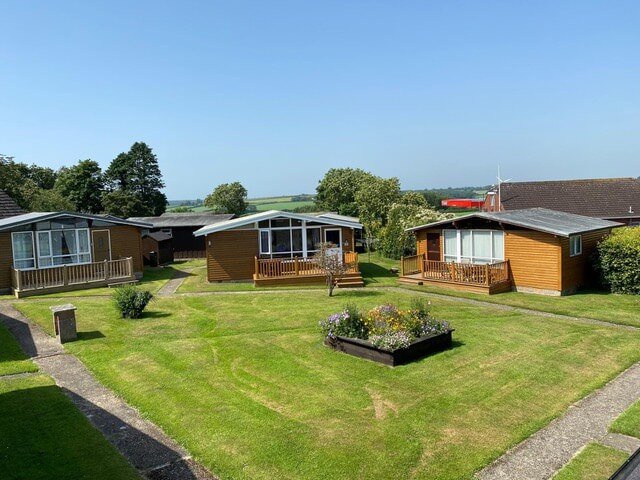
The owners of an East Devon chalet park at Seaton are urgently seeking ways to avoid being wrongly caught up in rogue landlord reforms .
Photo: Shelley White.
She added that government proposals to cap ground rent at £250 would “slice our income considerably” because of how the park was set up before they bought it, with the people who lease chalets paying costs that are half ground rent and half service charge.
Ms White said the government’s rules mean that businesses can’t increase other fees in lieu of the lost ground rent – again a protection intended to help people whose primary residence is a leasehold property but not, the Whites’ believe, necessarily relevant to holiday chalet parks that are not residential homes.
The park is only open for seven-and-a-half months of the year, and each chalet can only be used for a maximum of 28 days consecutively at any one time, after which they have to be vacated before lessees can return.
People who lease the chalets are also able to rent them out on the likes of Airbnb.
Ms White said every chalet had an agreement about how often the ground rent would increase – either every three or 10 years depending on the agreement linked to the specific chalet – and that increases were always linked to RPI.
That means those who lease chalets at the park can’t be stung with unexpected and vast rises in ground rent – the type of thing the legislation is meant to be cracking down on to protect people who permanently live in a leasehold property.
“When they sign, they know that the ground rent will go up every three or 10 years – depending on the agreement that is linked to the chalet – and that it will rise by RPI so there are no surprises and it is completely transparent,” Ms White said.
The pair said they had discussed the issue with their MP, Richard Foord, who is the Liberal Democrat member for Honiton and Sidmouth, and that they were due to speak to him again soon.
Mr Foord raised the issue in the House of Commons earlier in June, stating that the government should “recognise that it is catching people who really aren’t intended to be caught”.
“Despite Shelley and Martin investing their life savings in this park and working full-time, they are concerned their future livelihood is going to be wiped out by the unintended consequences of the leasehold legislation,” he told a committee in Westminster.
“The leasehold legislation is quite rightly required to crackdown on rogue landlords and property management companies from exploiting relationships with tenants, but the law is not designed for capturing chalet parks.
“And yet my constituents find that under the leasehold legislation, their chalets may be classed as long leases subject to the ground rent cap and they fear being caught under the lease extension problem.
“When the leases expire in about 40 years, they will have to issue an extension but then only charge a peppercorn rate, and so they are concerned that the very modest park fees they charge, which the current lessees are very happy with, will not be sufficient to sustain the business.”
A spokesperson from the Holiday and Rental Parks Association (HARPA) said it was aware of the “very real concerns” that the Whites had for their business which ”result from an apparently unintended consequence of the Leasehold Reform Bill”.
“Whilst the vast majority of holiday parks sell holiday caravans and holiday lodges under a licence agreement rather than a leasehold agreement, the couple acquired their business with the leasehold arrangement in place,” the spokesperson said.
“We are grateful to Richard Foord MP for raising this matter in Parliament, and have offered him any help or support we might be able to provide.”
The Ministry for Housing, Communities and Local Government has been contacted for comment.


